
Codec (DMNA) Solutions
Better Compression. Without a Trade-Off.
Introducing Digital Media New Algorithm (DMNA)
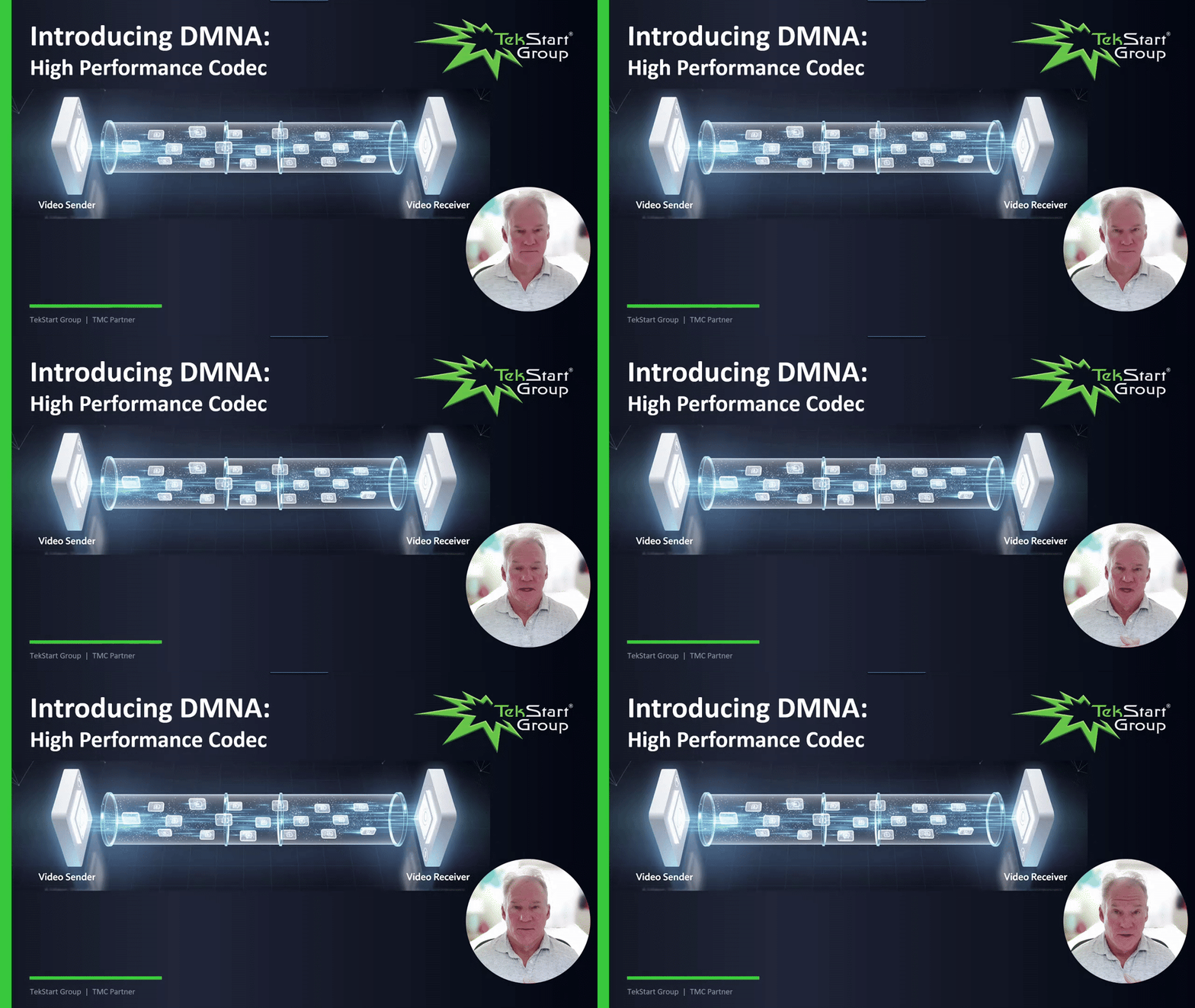
Watch this demonstration video to see how DMNA can improve video encoding performance by 75% based on H.264 standard, converting a .YUV file to an .MP4 file.
Every video-enabled device lives or dies by the same constraint: how much footage it can capture, compress, and transmit without burning through bandwidth, storage, or power? DMNA is a proprietary codec algorithm that breaks this trade-off. Developed by Dr. Masafumi Tanaka, Visiting Professor at the University of Tokyo, DMNA delivers a mathematically optimized approach to digital media processing that is faster, lighter, and smarter. Now there is a way to more efficiently address the resource challenges of achieving h264 video compression.
TekStart® Group has an exclusive right to distribute this technology across North America.
In real-world testing, DMNA delivered up to a 75% performance improvement with h264 video compression, with lower latency and higher quality at the same bitrate. The same mathematical approach extends across DMNA's full codec portfolio, from HEVC and JPEG XS to MPEG-2, VP9 decoding, and AAC/MP3 audio. Built for OEMs in broadcast and media production, security and surveillance, video conferencing hardware, medical imaging, consumer, and mobile devices, DMNA delivers more performance out of every frame.
One Algorithm, a Full Codec Portfolio
Video, Still-Image, and Audio – As Hardware or Software IP
DMNA doesn't apply to just a single codec. It's a mathematical approach applied across an entire portfolio of compression standards, available as either hardware IP (RTL cores, including FPGA-optimized variants) or software IP (portable C code optimized for ARM, Intel, and other processors). The portfolio of Codec solutions supports:
Whether you need a drop-in hardware core for a new ASIC, an FPGA-ready IP block, or a software library optimized for your existing processor, TekStart can match the right DMNA-powered format and delivery method to your product.
Why Choose DMNA to Optimize Media Processing?
Unmatched Efficiency Across Video-Intensive Industries
TekStart’s DMNA-powered codec solutions transform how video and media data are processed in real-time environments. Applying advanced mathematical principles such as factorization and hierarchical processing enables DMNA to streamline the codec process with greater proficiency, resulting in faster, more efficient video compression and decoding.
Dramatically reducing the computational load for video encoding and decoding delivers:
These advantages make a DMNA-powered codec the ideal choice for industries where speed, clarity, and reliability are non-negotiable.
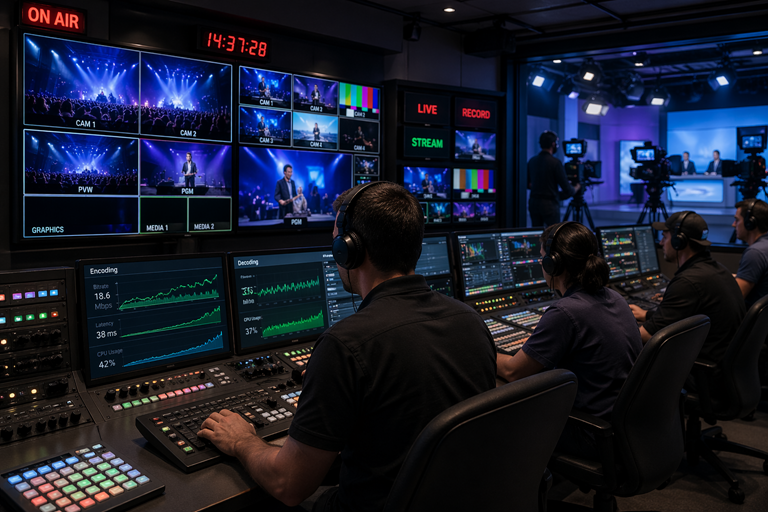
Industry Applications
The DMNA Advantage: Technical Insights
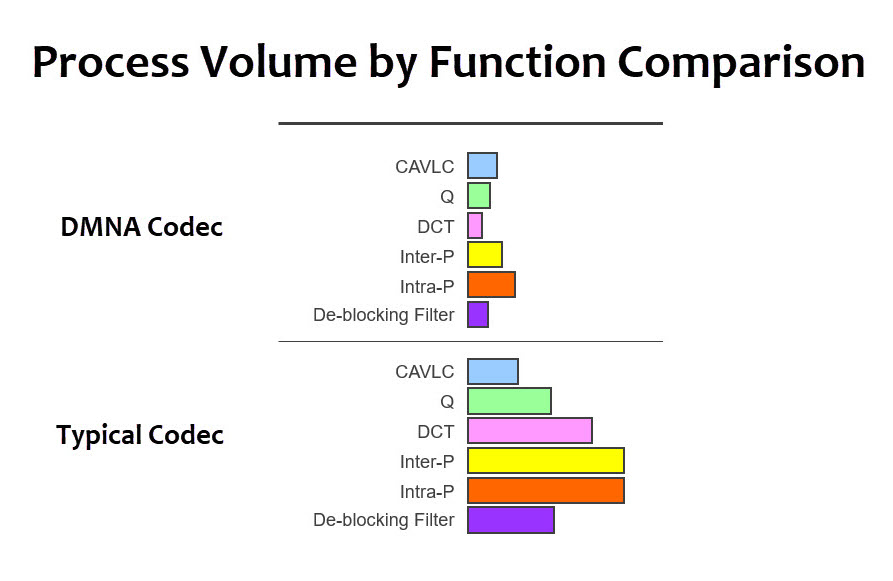
Each of the above functions contributes measurable gains in speed and efficiency – translating into smoother playback, faster encoding, and lower system demands.
The Result: Performance That Scales
By leveraging DMNA in this codec offering, TekStart enables you to optimize video, image, and audio processing with reduced resource burden across devices and industries, either as a software- or hardware-based solution. From compact drone controllers to rugged field terminals, this DMNA-powered codec solution delivers efficiency gains rivalling traditional options, without any added complexity.
Ready to Improve Your Codec Performance?
Whether you're building bandwidth-constrained devices or optimizing an existing video pipeline, TekStart Group is ready to help you evaluate a DMNA-based codec.